
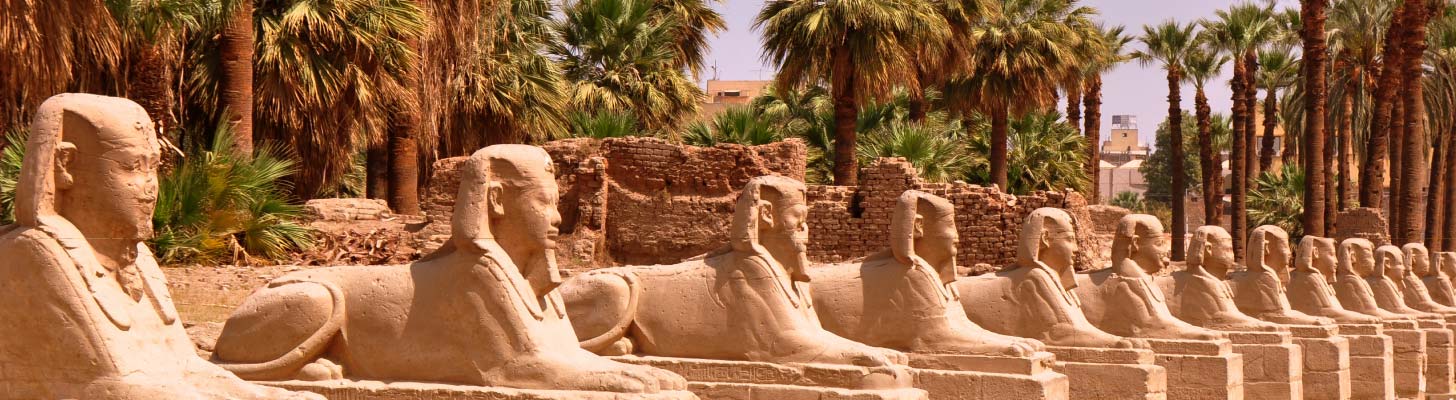
Luxor is a quite stunning city, a place that traces its illustrious heritage back through 4000 years of rich history. Along with the southern temple of Abu Simbel and the Pyramids at Giza, the west bank of the Nile in Luxor is one of the most important sites in Pharaonic Egypt. Here you’ll find the valley of the kings – a vast necropolis including – amongst many other marvels – the tomb of Tutankhamen. Also on the West Bank is the Valley of the Queens and the Colossi of Memnon – subject of the famous poem by Shelley.
Within the town of Luxor itself, you’ll find the vast temple of Luxor with its monumental statue to Ramesses II and the Temple of Karnak. There are good opportunities for onward travel in Luxor. The beautiful temple of Dendera is an hour’s drive to the north and can be combined with a visit to the temple of Seti in Abydos. Many visitors combine a trip to Luxor with a cruise on the Nile to Aswan, a simply unforgettable experience. Luxor boasts some fantastic accommodation, from international luxury hotels to charming, historic boutique establishments and offers plenty of opportunity for dining on Egyptian’s delicious indigenous cuisine.
The hub of ancient Egypt, Luxor is built and developed around its two temples Karnak and Luxor. Karnak, is the largest temple of its kind anywhere in Europe and its scale is typified by the enormous hypostyle with over 130 majestic columns that leave most of its visitors in complete awe. The West Bank houses the Theban necropolis where the people of ancient Thebes buried their dead. After thousands of years, these temples along with numerous other sites remain in superb preservation. Downtown Luxor is an eclectic blend of sights, sounds and smells and is the perfect place to immerse yourself into an authentic destination where you can truly experience life with the locals.